
The Cathedral Church of Saint Martin in Spišská Kapitula is one of the most significant historical monuments in Slovakia and, thanks to its preserved architectural elements, also one of the oldest. Together with the remarkable urban complex of the ecclesiastical seat and the nearby Spiš Castle, it visually forms one of the country's most prominent landmarks. Its architectural development is closely tied to a rich history. The original collegiate church, which was elevated to a cathedral in 1776, has witnessed historical events of both supra-regional and international importance. Despite this, it is safe to say that a comprehensive monographic study covering the history and architectural development of this precious monument has been lacking until now.
This is not to say that the church has escaped research attention. Quite the contrary. The history of the cathedral has been explored by several prominent historians and art historians. However, their findings have mostly been confined to partial studies. The sole exception is the 1901 work Initia, progressus ac praesens status Capituli Scepusiensis by the Spiš historian and cathedral canon Jozef Hradszky, which stands out for its exceptionally detailed heuristic research for its time. Among comprehensive works, one should also mention the 1981 guide to the town monument reserve by authors Puškárová and Puškár, titled Spišská Kapitula – Mestská pamiatková rezervácia. Other publications concerning the Cathedral of Saint Martin have been limited primarily to smaller tourist guides, such as the two editions of the Spišská Kapitula guidebook by Ivan Chalupecký from 1994 and 2002. Until now, no independent scholarly monograph dedicated solely to this church has been published.
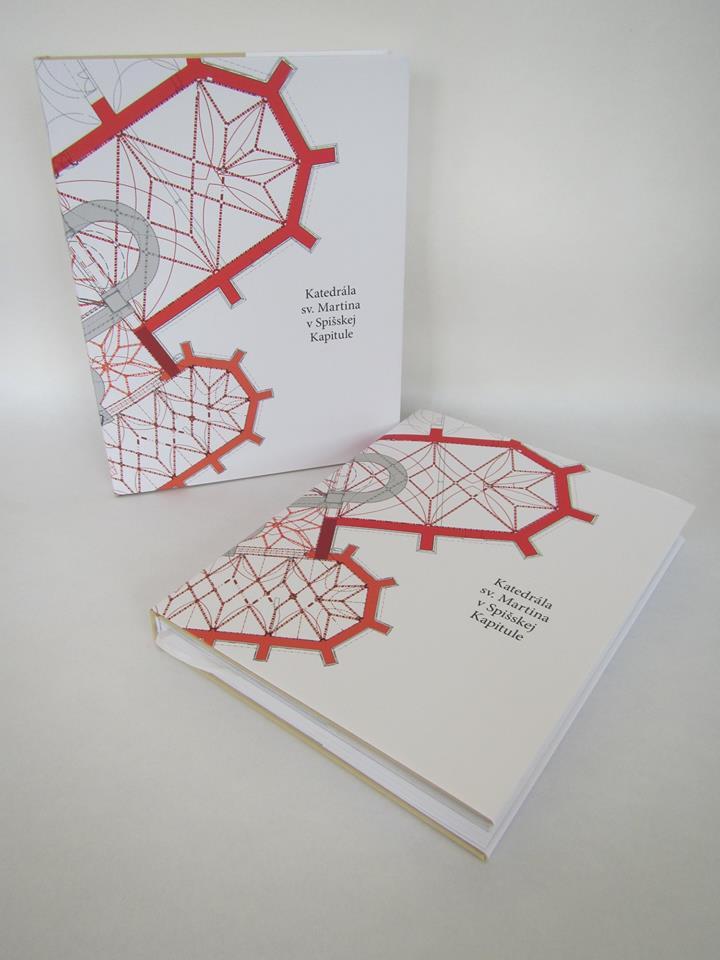
Based on extensive architectural and historical research conducted between 2006 and 2007, and on subsequent, primarily archaeological research, a team of authors has synthesized the results of previous studies into the form of a publication. Together with the Bishop's Office in Spišská Kapitula, they decided to make these new findings accessible to the wider public through a monograph—even though research in the church continues to this day as part of its restoration, and every restoration intervention brings new discoveries.
The Cathedral of Saint Martin in Spišská Kapitula represents uniquely preserved Romanesque architecture in the Spiš region from the early 13th century. Since 1993, it has been inscribed on the UNESCO World Heritage List (today under the extended name Levoča, Spišský Hrad and the Associated Cultural Monuments). Throughout its existence, it has held a significant historical position both in the history of the Spiš Provostry and later the Diocese, as well as in the development of architecture and visual arts. All of its values are preserved in a uniquely authentic form to this day.
The publication, prepared directly by researchers since 2013, aims to meet the expectations of a broad spectrum of readers—from experts to history enthusiasts of all ages—using accessible and comprehensible language. It consists of two main parts.
The first part presents the latest findings from interdisciplinary research. Thanks to the use of modern exploratory methods (dendrochronological dating of wood, ground-penetrating radar measurements), significant new discoveries were made that shifted the dating of the cathedral's origins. These methods identified its initial Romanesque form: the layout of a three-aisled space with a transept (as opposed to the previously stated form of a three-aisled basilica), and a royal westwork on the first floor of the western facade. This new presentation of the oldest phase of its architectural development has shown that, even at the time of its creation, the church ranked among the high-quality European architectural production of its era. The publication presents similar fascinating discoveries in other contexts as well.
The team of authors who contributed to the preparation of the text consists of the researchers who have professionally dedicated themselves to this subject for many years. For this reason, the publication aspires to monographically present the history and architectural development of this monument in the form of a generational, interdisciplinary testimony of its authors.
Throughout its historical development, the Cathedral of Saint Martin was called by various names depending on its function. From its beginnings until 1776, it was a provost's church (its highest cleric being the Spiš Provost), or it was called collegiate, from the Latin ecclesia collegiata—a church serving a college of canons, i.e., a collegiate chapter headed by a provost. In 1776, the Diocese of Spiš was established, and the church was elevated to a cathedral—from the Latin ecclesia cathedralis—the residential church of a bishop. The bishop heads the cathedral, or residential, chapter. Therefore, we use all these names in the texts: when we want to emphasize the function of the church in a given period, we refer to it as the Provost's Church of Saint Martin or the Collegiate Church of Saint Martin. Most often, however, the reader will encounter its current, widely known name, the Cathedral of Saint Martin.
The text of the book is conceptually divided into two main parts—the study and the catalog section. To streamline the reading experience, the descriptive part of the study is supplemented with bracketed references to specific entries in the catalog section (AR, UH, and the like). This allows the reader to navigate the book easily and comfortably, following both the description of the church's historical development and the expert descriptions of the preserved artifacts.
___________
Magdaléna Janovská, Vladimír Olejník